
Inset vs Outset Fires: What's the Difference?
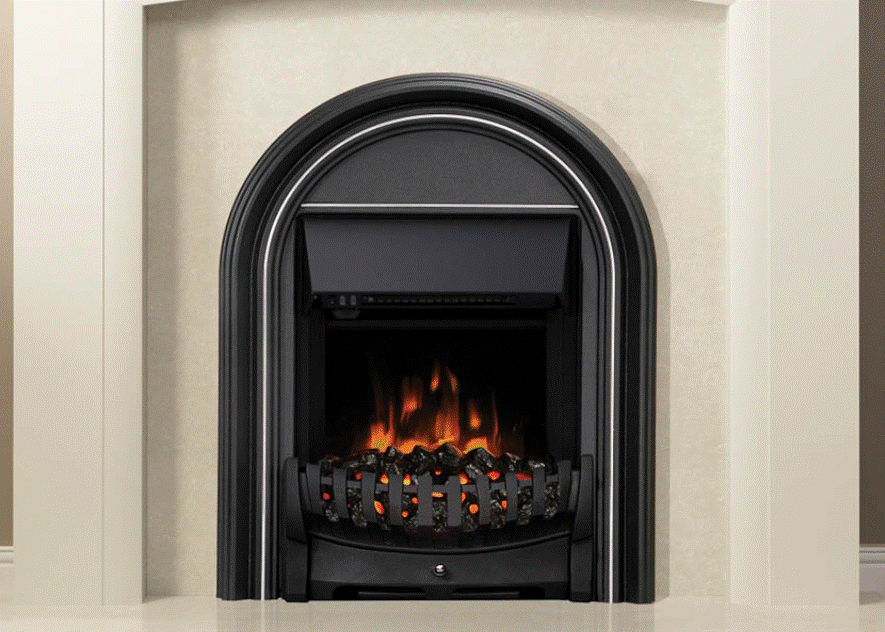

Choosing a new fire involves more than deciding between traditional and contemporary styling. The way a fire fits into your fireplace opening or projects into the room can affect its appearance, the space available and the installation requirements.
Inset and outset fires are two common configurations. Understanding the difference can help you narrow down your options when updating an existing fireplace or planning a new feature.
What Is an Inset Fire?
An inset fire is designed to sit within a suitable fireplace opening or purpose-built recess. Depending on the model, it may be installed with a fireplace surround or incorporated into a more contemporary wall design.
Because much of the appliance sits within the opening, an inset fire can create a relatively streamlined appearance without projecting as far into the room as some outset models.
Inset fires are available in different styles, including traditional designs and contemporary models with wider viewing areas. Electric and gas options are available, although the installation requirements vary considerably between appliances.
Advantages of Inset Fires
A neat appearance within a suitable fireplace opening.
Options for both traditional and contemporary interiors.
Potential to make efficient use of available floor space.
Compatibility with selected fireplace surrounds and suites.
What Should You Consider?
The dimensions and depth of the opening are important. Check the appliance's installation requirements, including recess dimensions, ventilation, clearances and any restrictions on surrounding materials.
Not every inset fire will fit an existing fireplace opening without alterations. Some models require a particular cavity or additional preparation.
What Is an Outset Fire?
An outset fire sits forward of the fireplace opening rather than being fully recessed into it. Depending on the model, it may stand on a hearth or project from a suitable wall-mounted or fireplace arrangement.
Outset designs can be useful where the available recess is unsuitable for a particular inset appliance. They are also available in styles that complement traditional fireplace settings.
The term describes the position of the fire, rather than a particular fuel type. Always check the individual product's installation requirements.
Advantages of Outset Fires
A projecting design that can suit traditional fireplace settings.
Options where a suitable inset installation is not available.
A range of styles and finishes, depending on the appliance.
Potential to create a distinctive feature around an existing fireplace.
What Should You Consider?
Outset fires may project further into the room, so consider the available space and how the appliance will sit in relation to furniture and walkways.
Check the required hearth, clearances and fixing arrangements for the specific model. Requirements differ between electric and gas appliances, so one installation approach should not be assumed to suit every fire.
Inset vs Outset Fires: Key Differences
Feature | Inset fire | Outset fire |
Position | Sits within a suitable opening or recess | Projects forward from the opening or wall |
Appearance | Often streamlined and integrated | More prominent or projecting |
Space | May reduce projection into the room | May occupy more room space |
Existing fireplace | Opening dimensions and depth must be checked | The hearth, wall or fireplace arrangement must be suitable |
Installation | Depends on the recess and appliance specification | Depends on the fixing, hearth and appliance specification |
These are general distinctions. Individual models may have different installation arrangements.
Which Type of Fire Is Right for Your Home?
An inset fire may suit you if you want a more integrated appearance or are working with a suitable existing fireplace opening.
An outset fire may be worth considering if you prefer a projecting design or your chosen appliance is intended to sit forward of the opening.
Before deciding, consider the type of fire you want, the space available, the existing chimney or flue arrangements and the overall look you wish to achieve.
If you are replacing an existing fire, do not assume that a new appliance can use the same opening or connections. Check its compatibility and installation requirements first.
Frequently Asked Questions
Are inset fires better than outset fires?
Neither is automatically better. The right option depends on your preferred appearance, available space, existing fireplace and the requirements of the individual appliance.
Can an inset fire be installed in any fireplace?
No. The opening, depth, materials and other installation conditions must meet the manufacturer's requirements. Some fireplaces may need alterations or may not be suitable.
Do outset fires need a hearth?
This depends on the appliance and its installation instructions. Some fires require a suitable hearth, while certain wall-mounted electric models may have different requirements.
Can I replace an outset fire with an inset fire?
Possibly, but the opening, flue or electrical arrangements and surrounding materials must be checked. A change of configuration may require alterations to the fireplace.
Are inset and outset fires available as electric or gas models?
Both configurations are available in different product ranges, but the options depend on the manufacturer. Gas appliances have additional flue, ventilation and installation requirements.
Explore Fireplace Options
Explore our range of electric fires, gas fires and fireplace suites to find designs that suit your home. Bathroom & Fireplace Warehouse Ltd in Chatham, Kent, welcomes enquiries about available models and their suitability for your fireplace.


