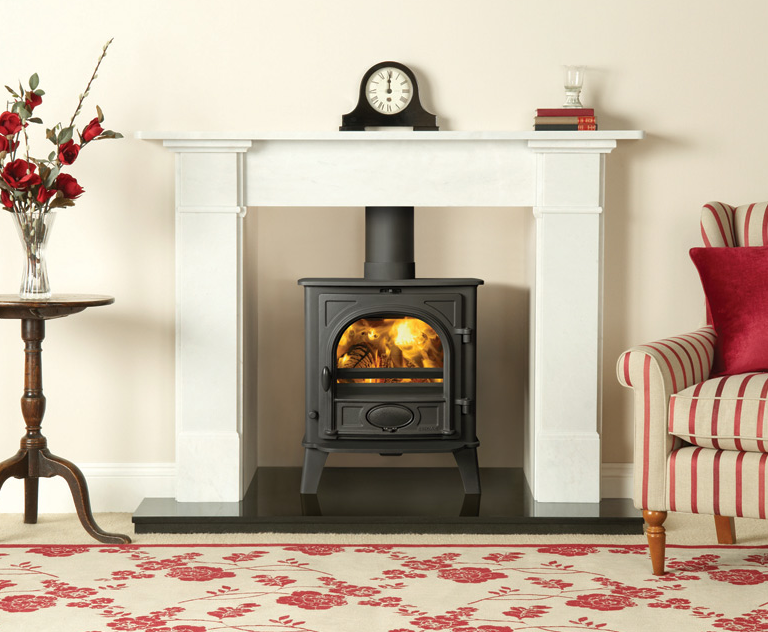
Can I Have a Wood Burner in Kent? Smoke Control Areas and Local Rules

At Bathroom & Fireplace Warehouse Ltd, we help customers explore fireplace and stove options at our showroom in Chatham, Kent. We've put together this guide to explain what you need to check before choosing a wood-burning stove for your home.
The short answer
Yes, in most cases you can have a wood-burning stove in Kent. However, before buying one, you should check whether your property is in a smoke control area.
If it is, you can only burn wood in a stove that has been specifically exempted by the Department for Environment, Food and Rural Affairs (DEFRA). You must also follow the manufacturer's instructions and the conditions of the appliance's exemption.
If your property is outside a smoke control area, you have more flexibility, although rules covering fuel, installation, ventilation and chimney safety still apply.
The quickest way to check is to enter your postcode into the DEFRA smoke control area map. You should also confirm the position with your local council if you are unsure.
What is a smoke control area?
A smoke control area is a legally designated area where restrictions apply to smoke released from chimneys. Local councils introduced these areas to improve air quality and reduce pollution from domestic and other solid-fuel burning.
Under the Clean Air Act 1993, as amended, smoke control areas restrict the release of smoke from chimneys and control which fuels can be burned in appliances.
In a smoke control area:
You must not emit smoke from a chimney in breach of the smoke control rules.
You can only burn authorised fuel unless you are using an appliance exempted by DEFRA.
Wood is an unauthorised fuel, so it can only be burned in an appropriate DEFRA-exempt appliance.
You must follow the manufacturer's instructions and the conditions of the stove's exemption.
What are the penalties?
In England, a council can issue a financial penalty of up to £300 for smoke emissions from a chimney in a smoke control area. You can also be fined up to £1,000 for buying unauthorised fuel to use in an appliance that is not exempt.
These restrictions relate to smoke from chimneys, rather than simply garden bonfires. Outdoor burning is covered by separate nuisance smoke rules, and excessive smoke can still lead to complaints or enforcement action.
For further information, see the official GOV.UK smoke control area rules.
How to check whether your Kent property is in a smoke control area
Smoke control areas are designated by individual local councils, not by Kent County Council. Their boundaries can vary considerably, sometimes covering particular streets or residential estates rather than an entire town.
This means that two neighbouring properties can have different smoke control requirements.
A property on the edge of a town or in a rural village may be outside a smoke control area, while another property a short distance away may be covered.
The easiest way to start checking is to enter your postcode into the DEFRA smoke control area map.
The map is indicative rather than a definitive legal confirmation. If you are unsure whether your property is covered, contact your local council's environmental health department.
Which Kent council should I contact?
Kent has 12 district and borough councils, with Medway operating as a separate unitary authority.
If you live in Kent, contact the council responsible for your property to confirm the smoke control requirements.
Council | Where to check |
Ashford Borough Council | Environmental health and smoke control guidance |
Canterbury City Council | Smoke control area information and local maps |
Dartford Borough Council | Smoke control area guidance |
Dover District Council | Environmental health advice |
Folkestone & Hythe District Council | Smoke control area information |
Gravesham Borough Council | Smoke control area guidance |
Maidstone Borough Council | Environmental health advice |
Medway Council | Smoke control area guidance |
Sevenoaks District Council | Smoke control area information |
Swale Borough Council | Environmental health advice |
Thanet District Council | Smoke control area information |
Tonbridge & Malling Borough Council | Environmental health advice |
Tunbridge Wells Borough Council | Smoke control area information |
If you are unsure which council covers your address, use the GOV.UK local council finder.
What if my property is in a smoke control area?
Being in a smoke control area does not mean you cannot enjoy a real wood fire. It means you need to choose an appliance that is approved for burning wood under the relevant restrictions.
Choosing a DEFRA-exempt stove
If you want to burn logs in a smoke control area, you need a stove that has been specifically exempted by DEFRA.
Not every wood-burning or multi-fuel stove qualifies. You should check the exact make and model against the official DEFRA exempt appliances list.
Also check which fuels the exemption permits. An exempt appliance is not automatically approved for every type of solid fuel.
If you are comparing different stove types, our guide to wood-burning and multi-fuel stoves explains the differences.
Using authorised smokeless fuel
You can also use authorised fuels in suitable appliances, including open fires and certain stoves.
Examples include anthracite, semi-anthracite, low volatile steam coal and approved manufactured smokeless fuels.
Always check the official authorised fuels list and make sure the fuel is suitable for your appliance.
Considering gas or electric fires
If you would prefer to avoid solid-fuel smoke control restrictions, a gas or electric fire may be an alternative.
Gas is an authorised fuel under smoke control rules, although the appliance must still be suitable for the installation and comply with the relevant safety requirements.
Electric fires do not burn fuel or produce chimney smoke, so they are not subject to solid-fuel smoke control restrictions. They can also be a practical option for properties without a suitable chimney.
You can explore our ranges of gas fires and electric fires to compare the available options.
Other things to check before installing a wood burner
Smoke control restrictions are only one consideration when planning a new stove installation.
You should also consider the condition of your chimney, Building Regulations and whether your property has any planning or ownership restrictions.
Building Regulations and installation
A new solid-fuel appliance and its associated flue must comply with Building Regulations, particularly Approved Document J, which covers combustion appliances, air supply, chimneys and the discharge of combustion products.
One option is to use an installer registered with a recognised competent person scheme, such as HETAS. A registered installer can certify qualifying work through the scheme.
Alternatively, the work may need to be notified to your local authority's building control department and inspected.
Always establish how the installation will be certified before work begins.
You can read the official Approved Document J guidance.
Chimney and flue condition
An existing chimney is not necessarily suitable for a new stove.
Before buying, arrange for the chimney and flue to be assessed by a qualified professional. It may need sweeping, inspection, lining or repair before an appliance can be safely installed.
The installer should also check the flue requirements, ventilation and clearances from combustible materials.
Carbon monoxide alarm
Appropriate carbon monoxide detection must be provided when a fixed combustion appliance is installed in a dwelling, in accordance with the relevant Building Regulations guidance.
Follow the alarm manufacturer's instructions for positioning, installation and testing.
Planning permission
Installing a stove inside your home will not usually require planning permission.
However, installing a new external flue may have additional planning requirements. Permitted development rights can depend on the position and height of the flue, the type of property and whether it is listed or located in a conservation area or another designated area.
Kent has many older and listed properties, so check with your local planning authority before making external alterations if you think these restrictions may apply.
You can find further information through the GOV.UK planning permission guidance.
Leasehold and rented properties
If you rent your home, speak to your landlord before arranging any work.
If you own a leasehold property, check your lease and obtain any necessary permission from the freeholder or managing agent. Installing a stove may involve alterations to shared structures, roofs or chimneys.
Home insurance
Check your home insurance policy before installing a stove and tell your insurer where required.
Some insurers ask for evidence that the appliance was installed by a suitably qualified professional, such as a HETAS-registered installer.
Frequently asked questions about wood burners in Kent
Can I have a wood burner in a smoke control area?
Yes, provided you use a stove that is exempted by DEFRA for burning wood and follow the manufacturer's instructions and exemption conditions.
Are all areas of Kent smoke control areas?
No. Smoke control areas cover specific designated locations rather than the whole county. Boundaries can vary between streets and neighbourhoods, so check your postcode and confirm with your local council.
Can I use an open fire in a smoke control area?
You can use an open fire with authorised fuel, but you cannot burn wood on an ordinary open fire in a smoke control area.
Is every Ecodesign stove DEFRA-exempt?
No. Ecodesign and DEFRA exemption are separate approvals. If you want to burn wood in a smoke control area, check the exact stove model against the DEFRA exempt appliances list.
For more information about the general rules, see our guide to whether wood burners are legal in the UK.
Can I burn wood from my own garden?
You can burn your own properly seasoned wood in a suitable appliance. If your property is in a smoke control area, the stove must be exempt for burning wood. Never burn painted, treated or waste timber.
Do rural properties in Kent have to follow smoke control rules?
Not automatically. Some rural properties are outside designated smoke control areas, but you must check the actual address rather than assume that a village or countryside location is exempt.
Do I need planning permission for a wood-burning stove?
Installing a stove inside your home will not usually require planning permission. An external flue or alterations to a listed building may have additional requirements, so check with your local planning authority.
What if my neighbour's wood burner produces a lot of smoke?
If you are concerned about smoke from a neighbouring chimney, contact your local council's environmental health department. Smoke control rules and statutory nuisance provisions may apply, depending on the circumstances.
Visit our fireplace showroom in Chatham
If you are considering a new fire or fireplace, seeing different options in person can help you decide what will work best in your home.
Our Chatham showroom offers a range of wood-burning, multi-fuel, gas and electric fires. You can compare different styles and finishes and explore the options available for your property.
Whether you are replacing an existing fire, planning a fireplace renovation or considering a new installation, we can help you explore the products available.
Visit Bathroom & Fireplace Warehouse Ltd in Chatham to see our range of fires and fireplaces.
This guide provides general information for homeowners in Kent, England. It is not legal, planning, installation or professional advice. Smoke control boundaries, regulations and product approvals can change. Always confirm your property's status with your local council, check current government guidance and consult a suitably qualified installer before purchasing or installing an appliance.